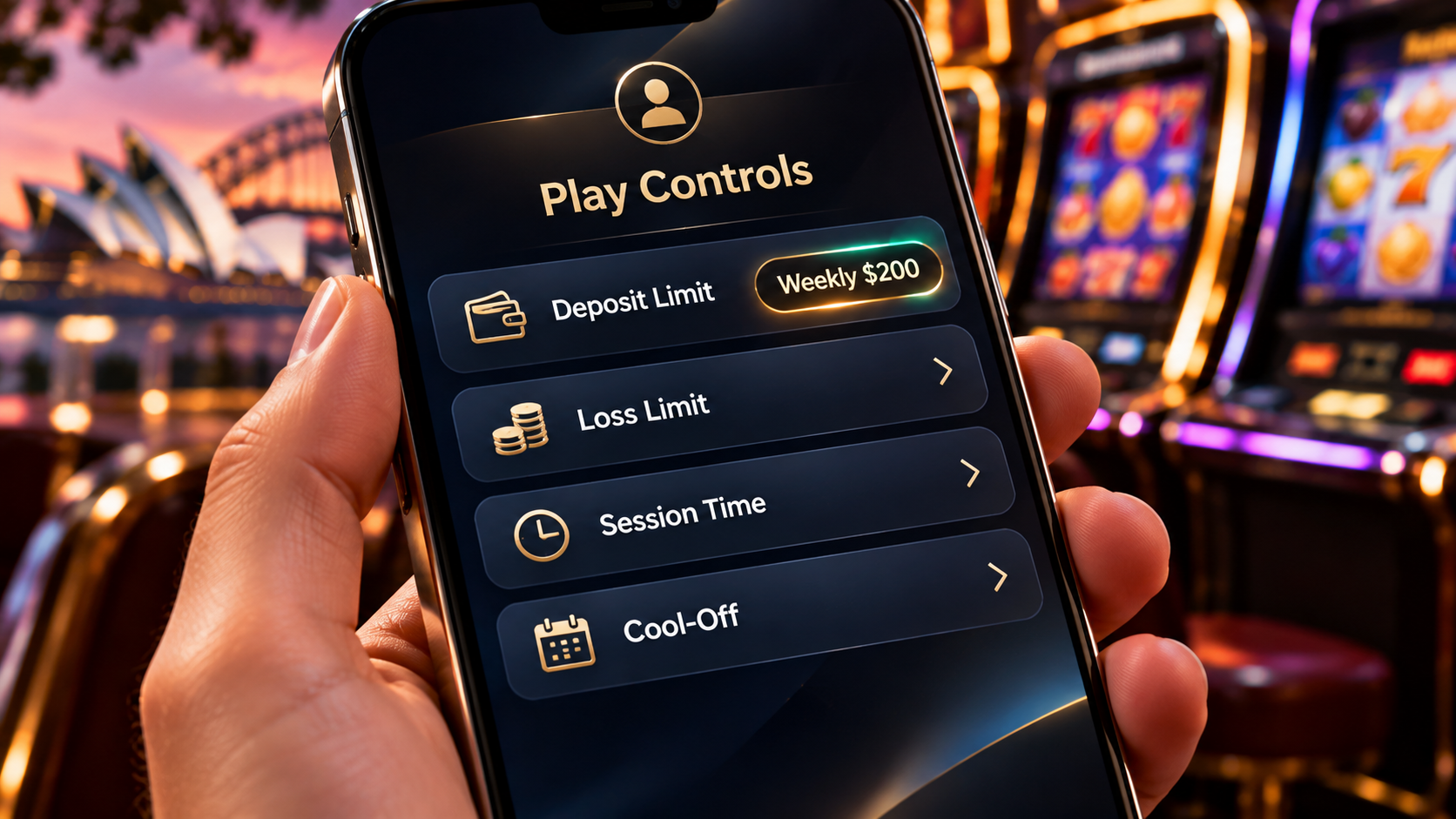
Australian online casinos must provide players with tools that keep spending visible and sessions manageable. Most licensed platforms carry these controls inside account settings, though how prominently they appear varies. Players at 1Playaus Casino account can access them directly from the profile page, alongside the usual payment and security options. Knowing what each tool does before a session starts is more useful than finding out mid-way through one.
What These Tools Actually Do
Responsible gambling tools are account-level controls. They do not change the games, the odds or the platform. What they do is create friction between an impulse and an action. That is most of what they need to do.
Deposit limits, time-based controls, spend caps, self-exclusion. Some reverse with a cooling-off period attached. Others, once activated, stay active regardless of what the player requests afterward. Worth knowing which is which before touching any of them.
Deposit Limits
A deposit limit caps how much a player can add to an account within a set period. Daily, weekly and monthly options are standard across Australian platforms. The limit applies to incoming funds only: it does not touch an existing balance.
Setting one takes a minute. Lowering a deposit limit takes effect immediately. Raising it triggers a waiting period, typically 24 to 72 hours depending on the platform. The delay is deliberate. It puts a gap between the decision and the ability to act on it.
How to Use Deposit Limits Effectively
Set the limit before the first deposit, not after a session that ran longer than planned. A weekly cap tends to work better than a daily one for players who do not play every day: flexibility within the week, total still in view.
A monthly limit works well as a ceiling alongside a weekly cap. The two together mean a heavy week does not reset cleanly on Monday.
Loss Limits and Spend Limits
A loss limit tracks money lost during play within a set period, not money added to the account. Once the threshold is reached, the platform restricts further play until the period resets.
Some Australian platforms also offer a spend limit, which counts total wagers placed rather than net losses. For high-frequency play on low-stake titles, that gives a more accurate picture of activity than a loss limit does.
Both tools sit in the responsible gambling section of account settings on most licensed platforms. The setup process is short.
Session Time Limits and Reality Checks

A session time limit cuts off play after a defined period. One hour, two hours, whatever the player sets. Time is up, session ends.
Reality checks are a lighter version of the same idea. A notification appears at set intervals, every thirty minutes is common, showing how long the session has run and how much the player has spent. Continue or stop, the choice stays with the player. The check does not force either outcome, which is partly the point.
For Australian players who lose track of time during a long pokie session, reality checks are a low-friction option. Visibility, without the hard stop.
| Tool | What it limits | Reversible? | Cooling-off period |
| Deposit limit | Incoming funds | Yes | 24–72 hours to increase |
| Loss limit | Net losses during play | Yes | 24–72 hours to increase |
| Spend limit | Total wagers placed | Yes | 24–72 hours to increase |
| Session time limit | Duration of one session | Yes | Immediate |
| Cool-off period | Account access | Yes | After period ends |
| Self-exclusion | Account access | No | Minimum 6 months |
Cool-Off Periods
A cool-off period temporarily suspends account access. The player sets the duration: a day, a week, a month. During that time, the account sits inactive. Deposits, wagers and bonuses all pause.
Some platforms allow early cancellation with a waiting period attached. Others hold the full duration regardless. Checking the platform’s specific terms before activating is worth the two minutes it takes.
When a Cool-Off Period Makes Sense
After a run of sessions that felt longer or more expensive than planned, a cool-off does the job. It is not a permanent measure and does not involve any external register or third-party notification. It stays between the player and the platform.
For Australian players who want a break without committing to a longer exclusion, this is the right tool. Resets a pattern without closing the account.
Self-Exclusion
Self-exclusion is the most permanent option available. Once a player activates it, the platform closes the account for a minimum period: typically six months, with options extending to one, three or five years, and in some cases permanently.
The platform blocks the account, returns any remaining balance, and cuts off marketing communications and bonus offers. Licensed Australian platforms typically do not allow reactivation before the period ends, full stop.
Australia also operates a national self-exclusion register called BetStop, which lets a player exclude from all licensed Australian online wagering services at once rather than doing it platform by platform. Registration through BetStop applies across every participating service for the chosen period. One step, full coverage.
Licensed operators return the funds within a few business days, though the exact timeline varies by platform. Active bonus funds are voided and not paid out.

Using Multiple Tools Together
The tools are not mutually exclusive. A deposit limit plus a session time limit plus a reality check is a reasonable combination for a player who wants structure without restricting account access itself.
Layering works better than picking one. Set a deposit limit as the outer boundary, add a session time limit as the in-play control, use reality checks as the in-session prompt. Each handles a different point in the process, which means no single tool carries all the weight.
Australian platforms vary in how prominently they display these options. Some surface them during the deposit flow. Others keep them tucked in a dedicated section of account settings. Either way, they are there.
Keeping the Tools Active
Limits and controls only work if they stay in place. The cooling-off periods on increases exist for exactly this reason: a decision made in a calm moment should not come undone in a frustrated one thirty minutes later.
Review the settings periodically. Not just when something feels off. A monthly check of deposit limits, session caps and reality check intervals takes a few minutes and keeps the structure honest.
No Responses